

The Dawn of Intelligent Retail: Why AI Analytics is Indispensable for Growth

In an increasingly competitive and dynamic retail landscape, traditional data analysis methods are proving insufficient to keep pace with evolving consumer demands and market shifts. The sheer volume and velocity of data generated daily—from transactional records and loyalty programs to web traffic and social media interactions—present both an immense challenge and an unprecedented opportunity. This is where AI-powered data analytics emerges not just as an advantage, but as a critical imperative for unlocking sustainable retail growth. For retail managers and data teams alike, understanding the foundational shift AI brings to data interpretation is paramount. AI analytics transcends simple descriptive reporting, moving into the realms of diagnostic, predictive, and prescriptive insights that were previously unattainable. At its core, AI analytics leverages advanced algorithms and machine learning models to identify patterns, anomalies, and correlations within vast datasets that human analysts might miss. This capability allows retailers to move beyond reacting to past trends and proactively shape future strategies. The integration of artificial intelligence into data analysis fundamentally transforms how businesses understand their operations, their markets, and most importantly, their customers. It provides a granular, real-time understanding of what drives sales, what hinders customer satisfaction, and where the next opportunity for expansion lies. Retail growth in this era is not merely about increasing sales volumes; it’s about optimizing every facet of the business, from inventory management and supply chain efficiency to personalized marketing campaigns and enhanced customer experiences. AI provides the intelligence layer that connects these disparate elements into a cohesive, data-driven strategy. The journey towards intelligent retail begins with recognizing that raw data is merely potential; AI analytics is the engine that transforms this potential into actionable intelligence, directly fueling robust retail growth. Without it, businesses risk falling behind competitors who are already harnessing these capabilities to gain a significant market edge. The ability to quickly adapt and make informed decisions, powered by sophisticated AI analytics, is now the hallmark of resilient and growing retail enterprises. The retail sector, characterized by its rapid fluctuations and intense competition, demands a sophisticated approach to data. AI analytics provides this sophistication, offering a clear pathway to not just survive but thrive. It’s about building a future-proof retail model that can dynamically respond to market changes, anticipate customer needs, and consistently deliver value. For retail managers, this means having a powerful toolset to inform strategic decisions, optimize operations, and achieve unprecedented levels of efficiency and profitability. For data teams, it represents an exciting opportunity to leverage cutting-edge technology, transform data into a strategic asset, and drive tangible business outcomes that directly contribute to significant retail growth.
Intricate neural network visualizing customer data points connecting to reveal consumer behavior patterns.
Unveiling Customer Insights with Machine Learning: The Core of Modern Retail
At the heart of sustainable retail growth lies an intimate understanding of the customer. In today’s hyper-connected world, customer insights are no longer a luxury but a necessity, and machine learning is the primary engine driving their discovery. Traditional methods often provided a generalized view of the customer, but AI-powered machine learning algorithms delve deep into individual consumer behavior, revealing nuances and preferences that allow for unprecedented personalization and engagement. By processing vast amounts of transactional data, browsing history, interaction logs, and even external social media sentiment, machine learning models can construct highly detailed customer profiles. These profiles go beyond basic demographics, encompassing purchase propensity, brand loyalty, preferred communication channels, price sensitivity, and even emotional responses to products or marketing messages. This depth of understanding is crucial for any retail business aiming to optimize its strategies. One of the most significant contributions of machine learning to customer insights is its ability to identify intricate patterns and segments within the customer base that are not immediately obvious to human observation. For example, a machine learning algorithm might identify a segment of customers who consistently purchase premium organic products but only during specific promotional periods, or another segment that buys complementary items from different departments within a short timeframe, indicating a particular lifestyle. Such granular insights enable retailers to tailor product recommendations with remarkable accuracy, optimize pricing strategies to maximize conversion without alienating customers, and craft highly targeted marketing campaigns that resonate deeply with specific audience segments. The result is an enhanced customer experience that fosters loyalty and drives repeat business, directly contributing to retail growth. Beyond individual personalization, machine learning also facilitates a deeper understanding of overarching consumer behavior trends. It can predict shifts in demand for certain product categories, identify emerging fashion trends, or signal changes in customer sentiment towards specific brands or product features. This foresight allows retail managers to proactively adjust inventory, optimize merchandising, and innovate product offerings, staying ahead of the curve rather than merely reacting to market changes. Furthermore, machine learning excels at understanding the customer journey across multiple touchpoints, from initial awareness to post-purchase support. By analyzing interactions across websites, mobile apps, in-store visits, and customer service channels, retailers can identify friction points, optimize conversion funnels, and ensure a seamless, satisfying experience at every stage. This holistic view of the customer journey is vital for identifying opportunities to improve service, increase engagement, and ultimately, bolster customer retention and lifetime value. In essence, machine learning transforms raw customer data into a strategic asset, providing the profound customer insights necessary to make informed decisions that resonate with the target audience. It empowers retail managers to move from broad strokes to precise, data-driven interventions that build stronger customer relationships and accelerate retail growth. The ability to accurately predict consumer behavior and respond dynamically is no longer a futuristic concept but a present-day reality, essential for any retailer looking to thrive.
Crystal ball showing predictive retail data: sales charts, inventory levels, customer traffic.
Predictive Analytics: Anticipating Trends and Optimizing Operations for Retail Growth
The transition from descriptive data analysis to predictive analytics represents a monumental leap forward for retail operations and strategy. While historical data tells us what happened, predictive analytics—powered by sophisticated AI analytics and machine learning—tells us what is likely to happen, enabling retailers to anticipate future trends, mitigate risks, and optimize resources with unprecedented precision. This foresight is a cornerstone for sustainable retail growth in a volatile market. One of the most impactful applications of predictive analytics in retail is demand forecasting. Traditional forecasting methods often rely on historical sales data with limited external factors. AI-powered predictive models, however, incorporate a vast array of variables including seasonal patterns, promotional calendars, economic indicators, weather forecasts, social media sentiment, and even competitor activities. By analyzing these complex interdependencies, machine learning algorithms can generate highly accurate predictions of future demand for specific products at specific locations. This enhanced forecasting ability directly translates into optimized inventory management, a critical driver of retail growth. Overstocking leads to capital tied up in slow-moving inventory, increased storage costs, and potential markdowns, eroding profits. Understocking results in lost sales, frustrated customers, and damage to brand reputation. Predictive analytics minimizes both scenarios, ensuring the right products are available at the right time and place, thereby maximizing sales and operational efficiency. Beyond inventory, predictive analytics plays a crucial role in optimizing staffing levels. By forecasting customer traffic patterns at different times of the day, week, or season, retailers can schedule staff more effectively, ensuring adequate coverage during peak hours and reducing labor costs during slower periods. This not only enhances the customer experience through shorter wait times and better service but also improves employee productivity and morale, contributing to overall retail growth. Furthermore, predictive analytics extends to pricing strategies. Machine learning models can analyze competitor pricing, customer price sensitivity, product elasticity, and market demand to recommend dynamic pricing adjustments that maximize revenue and profit margins. This can involve personalized pricing offers, real-time markdown optimization for clearance items, or strategic pricing for new product launches, all aimed at enhancing the bottom line. Another vital application is in fraud detection and loss prevention. Predictive algorithms can identify anomalous transaction patterns, suspicious customer behaviors, or unusual return requests that indicate potential fraud, allowing retailers to intervene proactively and minimize financial losses. This safeguard protects profitability, a direct contributor to retail growth. Predictive maintenance for store equipment or supply chain logistics is also gaining traction, where AI predicts potential failures before they occur, reducing downtime and operational disruptions. By leveraging AI analytics for predictive insights, retail managers can make more proactive, data-driven decisions across all facets of their operations. This shift from reactive problem-solving to proactive anticipation empowers businesses to seize opportunities, mitigate threats, and maintain a competitive edge. The ability to look into the future, however imperfectly, through the lens of predictive analytics is no longer a luxury but a fundamental tool for any retail enterprise committed to achieving robust and sustained growth.
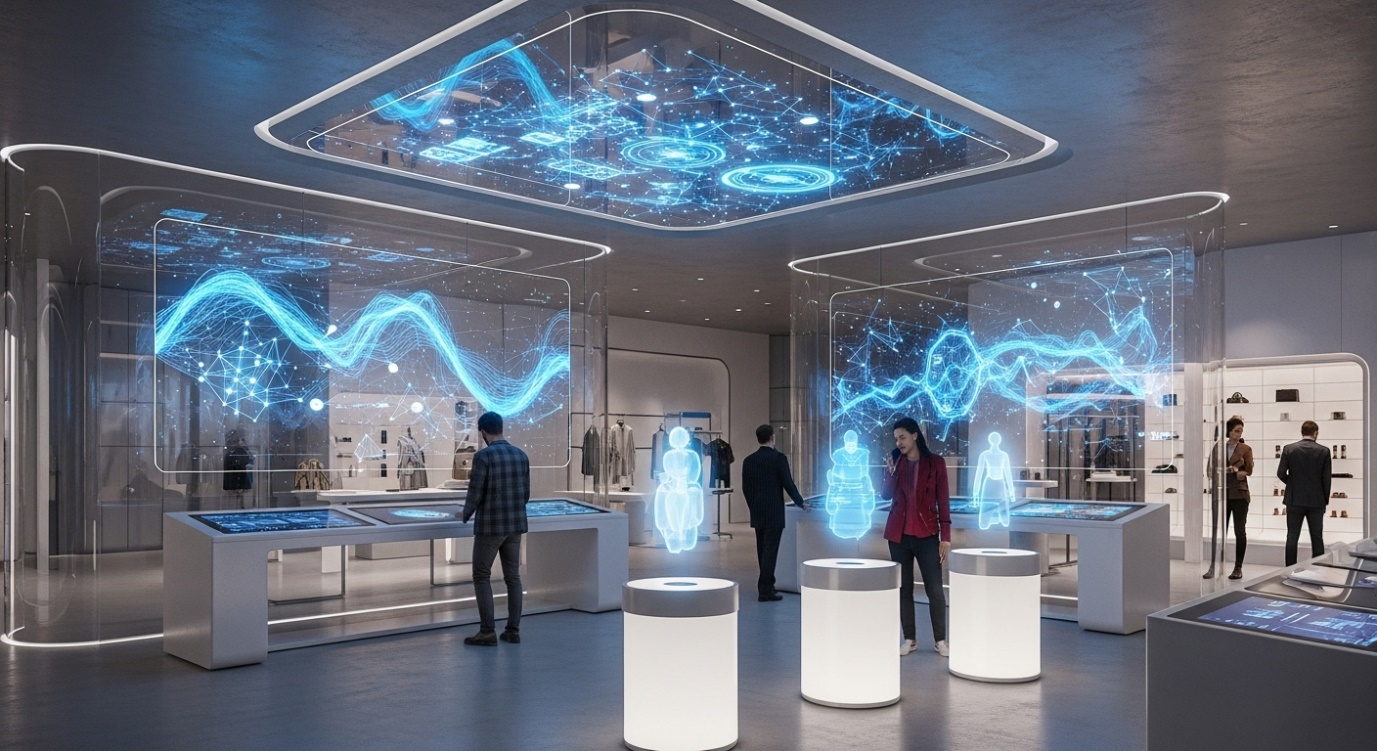
Diverse customers interacting with AI interfaces on screens in a modern, vibrant retail store.
Transforming the Customer Experience: Personalized Journeys and Engagement
In the modern retail landscape, the customer experience is no longer a mere differentiator; it is the product itself. Consumers expect seamless, personalized, and intuitive interactions at every touchpoint, and AI analytics is the foundational technology enabling retailers to deliver on these elevated expectations. By leveraging deep customer insights derived from machine learning, retailers can craft truly personalized journeys that foster loyalty, drive engagement, and significantly contribute to retail growth. One of the most visible applications of AI in enhancing customer experience is through hyper-personalization. Gone are the days of generic email blasts or one-size-fits-all promotions. AI algorithms analyze individual customer behavior, preferences, and purchase history to deliver tailored product recommendations, personalized offers, and customized content across various channels—website, mobile app, email, and even in-store interactions. This level of personalization makes customers feel understood and valued, significantly increasing the likelihood of conversion and repeat purchases. Consider an online shopper who frequently browses specific categories and adds items to their cart but doesn’t always complete the purchase. AI can trigger a personalized email with a special offer on those exact items, or suggest complementary products based on their past purchases, nudging them towards conversion. This proactive engagement, fueled by AI analytics, transforms casual browsing into committed buying. Beyond digital interactions, AI also revolutionizes the in-store experience. Smart mirrors can provide personalized styling advice, virtual assistants can help customers locate products, and AI-powered sensors can optimize store layouts based on foot traffic patterns and browsing behavior. Loyalty programs, too, are enhanced by AI, offering dynamic rewards and exclusive perks based on individual customer value and preferences, rather than a generic tier system. This tailored approach makes the loyalty program genuinely rewarding and encourages continued engagement. Customer service is another area profoundly transformed by AI. AI-powered chatbots and virtual assistants can handle routine inquiries, provide instant support, and guide customers through troubleshooting, freeing up human agents to focus on more complex issues. These AI tools not only improve response times but also provide consistent, accurate information 24/7. Furthermore, by analyzing customer service interactions (e.g., call transcripts, chat logs), machine learning can identify common pain points, measure sentiment, and provide insights that allow retailers to proactively address systemic issues, thereby improving overall satisfaction. The ability of AI to create a unified view of the customer across all channels—online, offline, and mobile—is crucial for a truly omnichannel experience. This ensures that a customer’s journey remains consistent and contextual, regardless of how or where they interact with the brand. For retail managers, this means having the tools to design and iterate on customer journeys that are intuitive, engaging, and highly effective in driving conversions and retention. For data teams, it’s about continuously feeding the AI models with fresh data to refine personalization and optimize engagement strategies. Ultimately, by leveraging AI analytics to understand and anticipate individual customer needs, retailers can move beyond transactional relationships to build lasting brand loyalty, directly fueling sustained retail growth. This commitment to an exceptional, personalized experience is the new benchmark for success in retail.
Strategic Implementation: Integrating AI Analytics for Sustainable Retail Growth
Implementing AI analytics effectively to drive retail growth is not merely about adopting new technology; it requires a strategic, phased approach that encompasses data infrastructure, talent development, and a cultural shift towards data-driven decision-making. For retail managers and data teams, understanding this integration roadmap is crucial for realizing the full potential of AI. The first critical step is establishing a robust and integrated data infrastructure. AI and machine learning models are only as good as the data they are fed. This means consolidating data from disparate sources—POS systems, e-commerce platforms, CRM, loyalty programs, supply chain, marketing automation, and external datasets—into a unified, accessible data lake or data warehouse. Ensuring data quality, consistency, and cleanliness is paramount; incomplete or inaccurate data will lead to flawed insights and ineffective AI applications. Investing in modern data engineering practices and tools is a non-negotiable foundation. Next, businesses must focus on talent development and organizational alignment. While AI analytics automates many tasks, human expertise remains indispensable. Retailers need data scientists to build and refine machine learning models, data analysts to interpret complex AI outputs, and business leaders who understand how to translate these insights into actionable strategies. This often involves upskilling existing data teams, hiring new specialized talent, and fostering a culture where data is democratized and valued across all departments. Collaboration between data teams, marketing, sales, operations, and IT is essential to ensure AI solutions address real business challenges and integrate seamlessly into existing workflows. A phased implementation strategy is highly recommended. Rather than attempting a massive, all-encompassing AI rollout, retailers should identify specific, high-impact use cases where AI can deliver immediate value. This could be optimizing inventory for a particular product category, personalizing recommendations for a specific customer segment, or streamlining customer service for common inquiries. Starting small allows teams to learn, iterate, and demonstrate tangible ROI, building momentum and internal buy-in for broader AI adoption. Each successful pilot project provides valuable lessons and refined models that can then be scaled across the organization. Security and ethical considerations are also paramount. Retailers handle vast amounts of sensitive customer data, making data privacy and compliance with regulations like GDPR and CCPA non-negotiable. AI systems must be designed with built-in safeguards to protect data integrity and ensure ethical use of customer insights. Transparency in how AI models make decisions, especially concerning personalized offers or pricing, builds trust with customers. Finally, continuous measurement and refinement are key to sustainable retail growth with AI. AI models are not static; they require continuous monitoring, evaluation, and retraining with fresh data to maintain accuracy and adapt to changing market conditions and consumer behavior. Establishing clear KPIs for AI initiatives and regularly reviewing their performance against business objectives ensures that the technology continues to deliver value and drive meaningful retail growth. Integrating AI analytics is an ongoing journey of continuous improvement. By strategically investing in data infrastructure, talent, ethical practices, and iterative implementation, retail businesses can unlock the transformative power of AI, not just to survive, but to thrive and achieve unparalleled levels of retail growth in the digital age. This commitment to intelligent transformation is what will define the leaders in tomorrow’s retail landscape.
